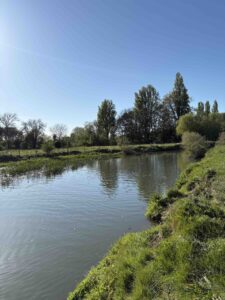
The Infant Thames Programme will focus on the uppermost stretches of the Thames, where the river is at its most vulnerable. These small, often overlooked channels play a vital role in water quality, biodiversity, and flood management downstream. Yet many are degraded due to historic modification and pollution, and are at risk from climate pressures.
The project will bring together citizen science, volunteer engagement, and hands-on restoration projects to help ensure these watercourses are thriving for both wildlife and local communities.
In the upper reaches of the Thames, which we call the Infant Thames we tested water at three sites along the same stretch.
Each one told a different story.
Nitrogen and phosphorus levels varied between sites, showing how local pressures can quickly impact river health, even over short distances.
From land use to runoff, small changes add up.
We aim to carry out more testing like this, helping us better understand what’s happening in our rivers and where action is needed most.
Better data means better decisions for our rivers.