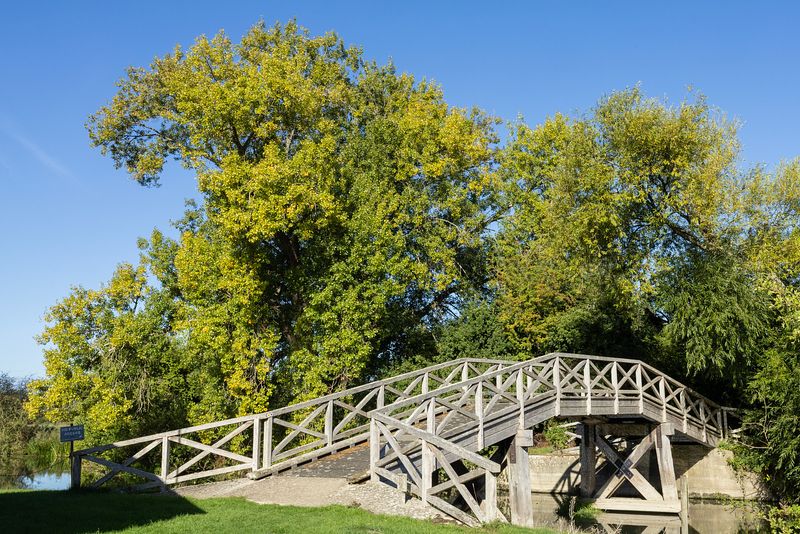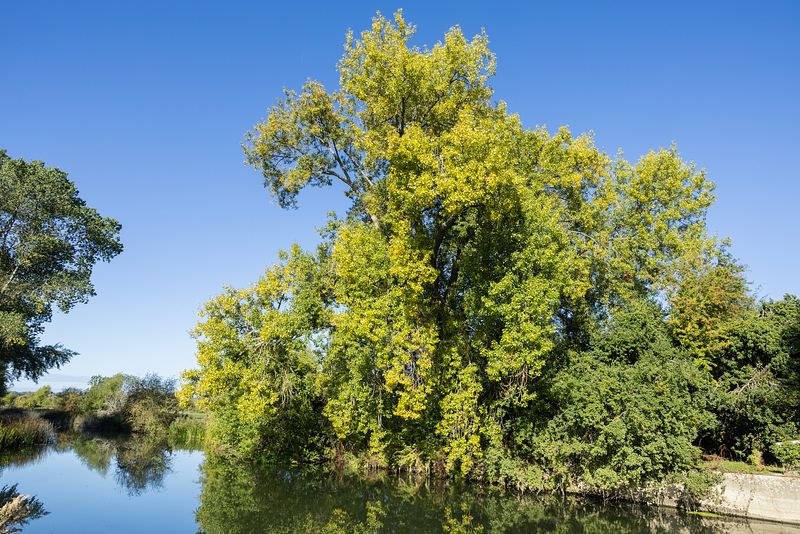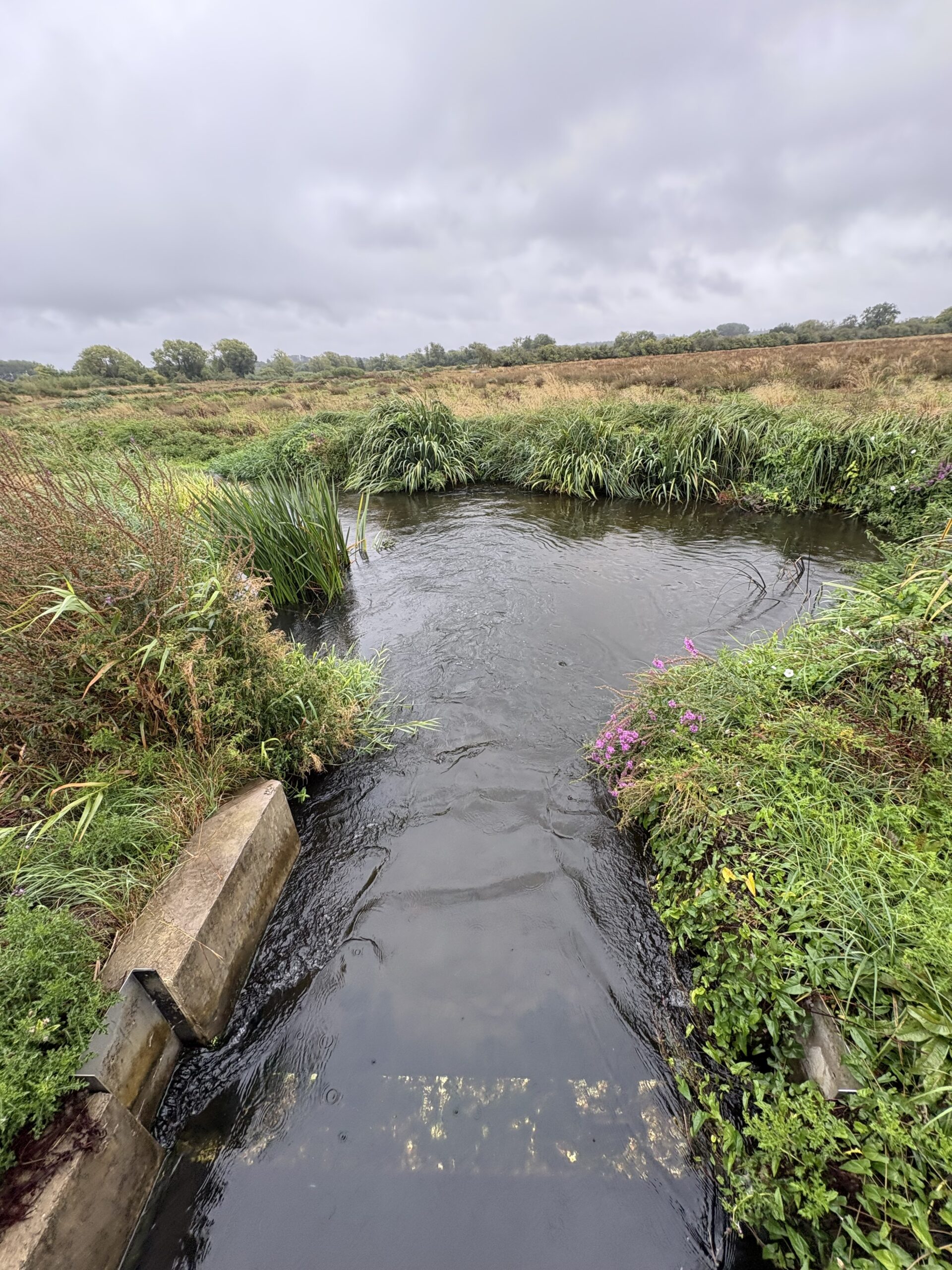
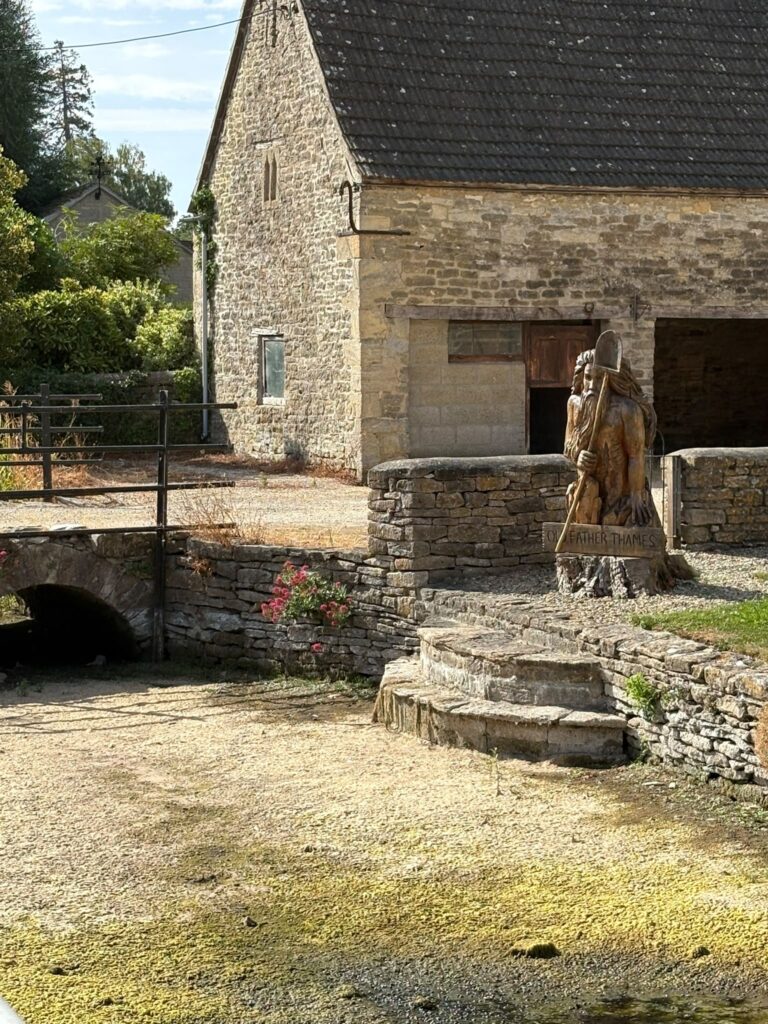
An ominous sign of the times? The wooden carving of Old Father Thames at Ashton Keynes overlooking a dried up river bed that only months ago was filled with a variety of aquatic life.
While the Upper Thames drying up is a nature feature, the frequency and duration of these period are appearing to increase as our climate changes. Hotter summer, more intense rainfall, longer dry spells, and increasing pressure on our water resources mean our rivers are experiencing greater extremes than ever before.
Too often, Natural Flood Management (NFM) is viewed purely as a tool for reducing flood risk. In reality, it is about making entire catchments more resilient.
When we restore wetlands, reconnect rivers to their floodplains, install leaky barriers, improve soil health, and create woodland, we are helping landscapes function as they were intended. Instead of rainfall rushing quickly into rivers and out to sea, more water is slowed, stored and allowed to infiltrate into the ground. That water then recharges aquifers, supports groundwater-fed rivers, and helps sustain flows during prolonged dry periods.
Have you noticed your local river drying up where it would normally be flowing? We would love to hear from you. Please send us your photographs and observations, and we will be happy to investigate and explore whether Natural Flood Management opportunities could help improve resilience in your local catchment.