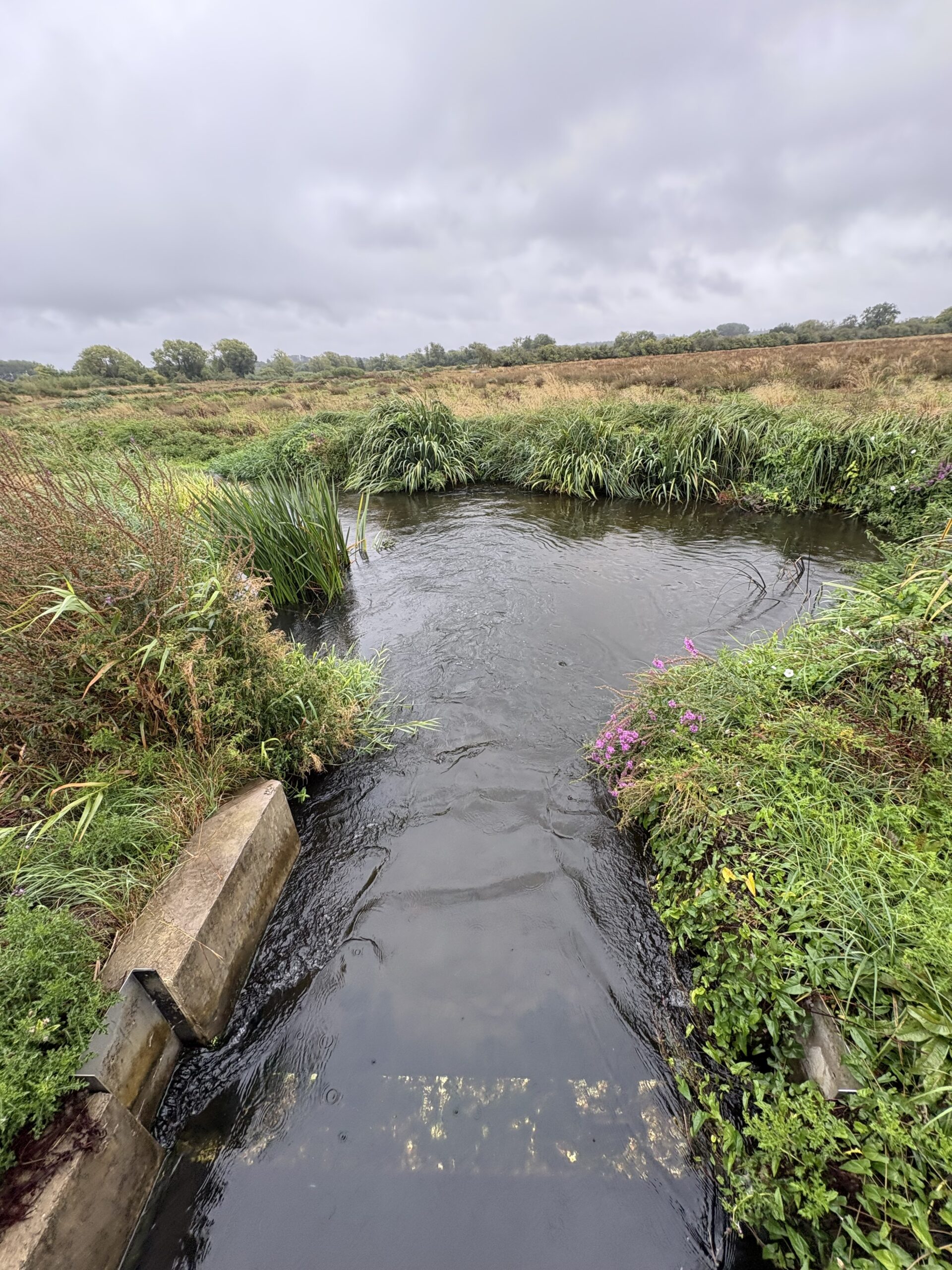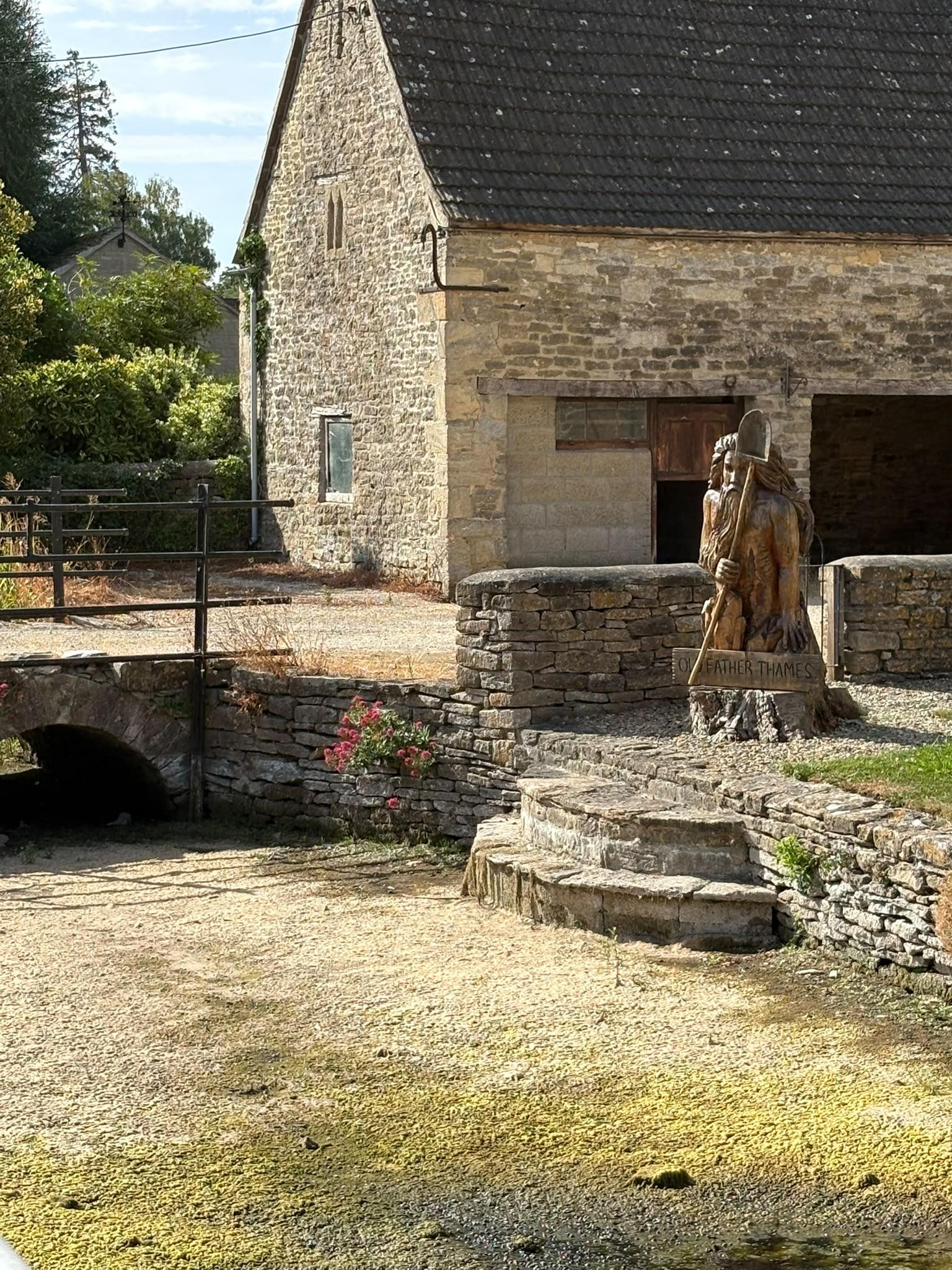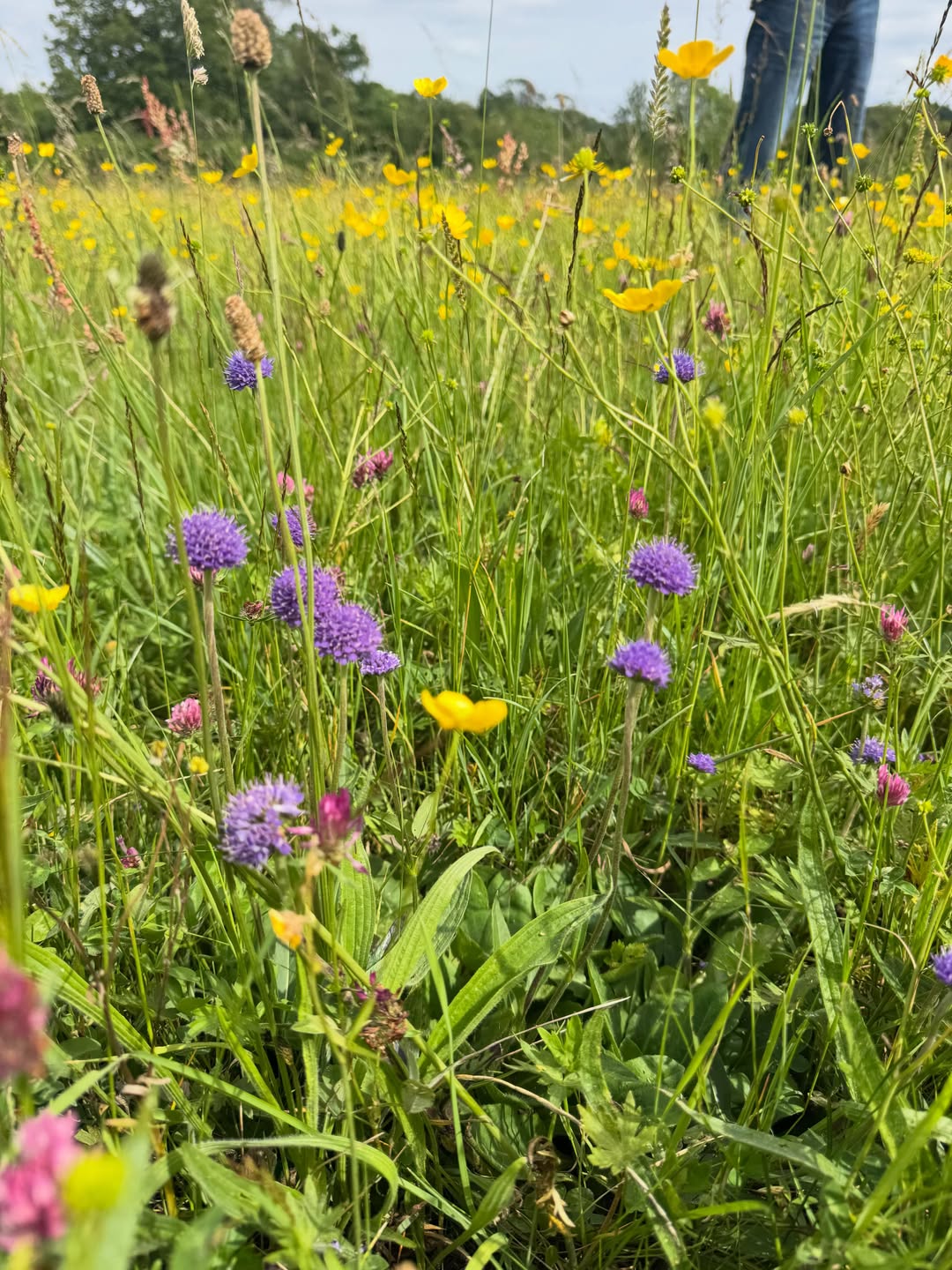
Delivering real, on-the-ground impact is a key objective of the Cotswolds Rivers Trust, and it has been hugely rewarding to make full use of Farming in Protected Landscapes (FiPL) funding, not only to develop three natural flood management (NFM) concept designs, but also to take one of these projects to completion all within a year.
Implementing projects like this can often take time to come to fruition, but the landholding in the Upper Windrush was supportive from the outset, enabling us to move quickly from design to delivery.
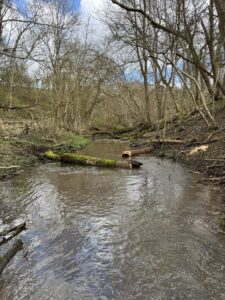
The work focused on installing a series of leaky woody dams, flow deflectors and berms across the main channel and a smaller tributary, alongside measures to reduce runoff onto a nearby road, which had previously flooded threatening nearby properties.
In addition to capturing surface flow before it reaches the road, the scheme was designed to intercept a newly emerged spring that had begun discharging along the road. With the attenuation pond slowly filling by the end of the first day, we are optimistic that this flow is now being successfully diverted. From here, water moves through the field into two further small wetland features, which slow, store, and retain the water safely away from the road.
The benefits of reducing the risk of damage to the road and to properties that have experienced flooding for many years far outweigh the cost of the works. By slowing and holding back water, the scheme will also reduce downstream peak flows while creating more wetland habitat, delivering multiple benefits through relatively simple interventions.
The leaky dams will play an important role during high-flow events, particularly during storm events that are being seen in increasing frequency. The flow deflectors and berms utilising locally won materials will help low flow conditions and open the canopy to allow more in-channel vegetation. Alongside annual monitoring, we aim to observe these features during storm events to better understand their performance in practice.
While individual measures may have a limited impact in isolation, their true value is realised when combined with neighbouring efforts and larger-scale wetland creation projects downstream. Together, these actions contribute to a collective approach that benefits communities at risk, from Bourton-on-the-Water, through to Witney, Oxford, and even London.
Expanding this NFM+ approach across the catchment is a key objective of the Cotswolds Rivers Trust. By building on these individual case studies, sharing lessons learned, refining designs, and scaling delivery, we can develop a coordinated, even landscape-scale, programme of work. As more projects are implemented, so too will our capacity for monitoring, evaluation, and learning, helping to deliver meaningful, far-reaching benefits over time.
If you have an idea for a potential project or interested in discussing our work, then please do reach out, we would be happy to talk!