Just over one kilometre of the River Evenlode has benefitted from in-channel restoration works this autumn, transforming a stretch identified as having exceptional potential for fish habitat and natural river processes.
The Cotswolds Rivers Trust secured funding for this work through the Environment Agency’s Fisheries Improvement Programme. Working with the landowners, and with feed in from a range of partners, we developed the concept designs, obtained the Flood Risk Activity Permit, ran a competitive tender process, and appointed Practicality Brown to deliver the restoration on the Grintley Hill reach of the Evenlode, within the Blenheim Estate.
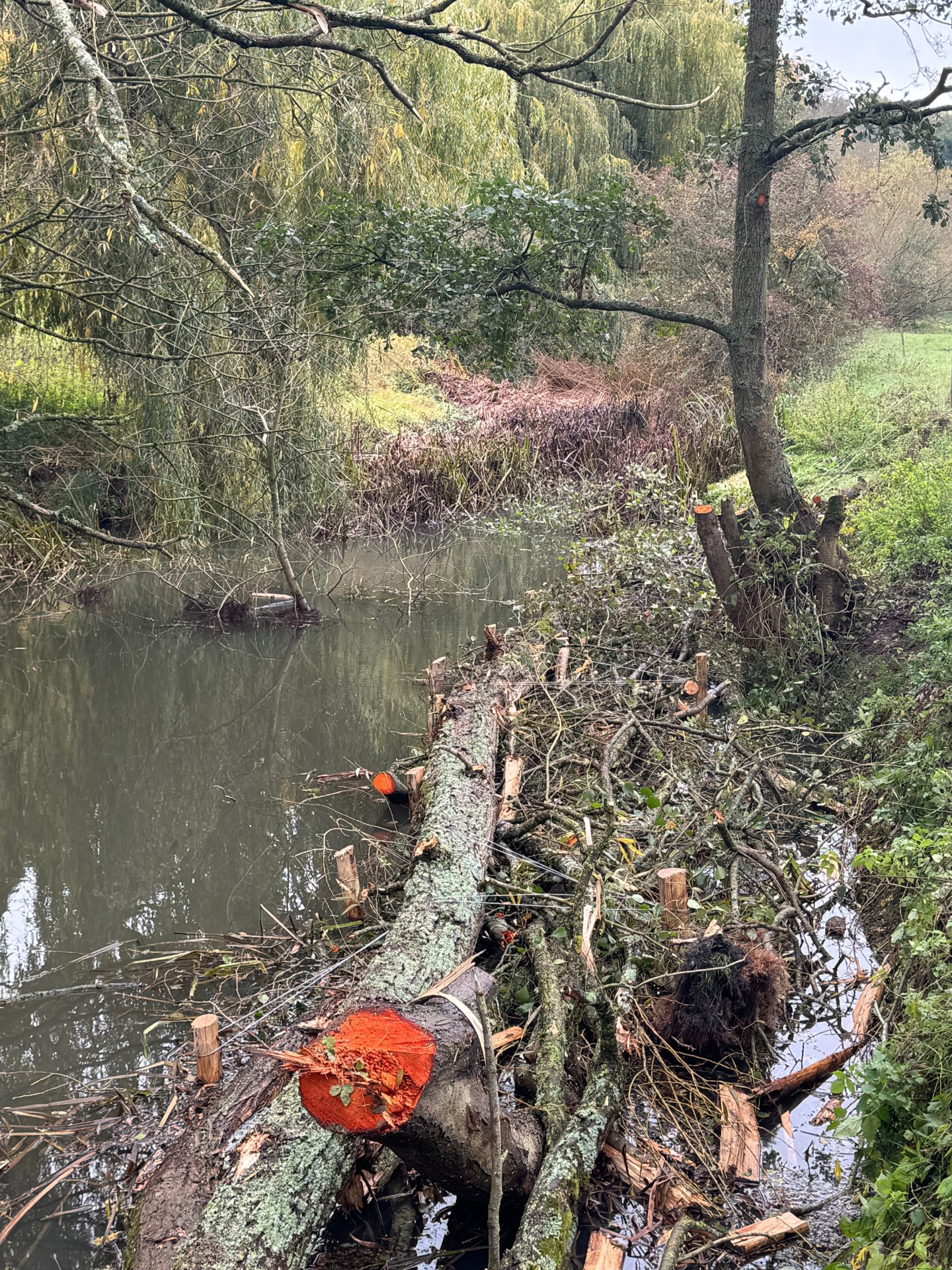
The project centred on increasing the river’s sinuosity and flow diversity using a combination of berms and large woody debris flow deflectors. By narrowing the channel and gently redirecting water from bank to bank, these features help the river regain natural patterns of movement, scour, and sediment deposition.
Bankside vegetation played a key role in the works. Coppiced hazel was used to build and stabilise the berms, while larger willow, elder, and ash stems formed the flow deflectors. Where possible, willow limbs were hinged to encourage re-rooting and future growth, adding long-term resilience.
Each flow deflector was securely installed using a “lock and key” method, cutting into the bank and fixing the structure with posts and wire. These additions create much-needed habitat complexity and act as natural filtration points. As sediment settles behind them, new shelves and berms will gradually form, providing ideal niches for semi-aquatic plants.
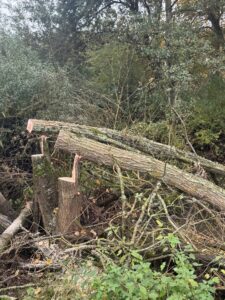
Hinging willow into the river to allow the tree to keep growing and creating that flow diversity
Additional works included hinging and felling selected willow limbs across the channel, then securing them to the bank. These natural “bridges” interact with the river during higher flows, helping to slow water and spread it onto the floodplain.
Over time, these interventions will help revitalise what had become a uniform, slow-moving reach during low flows. By accelerating and restoring natural processes, the river will offer much improved conditions for fish at every life stage, at varying water levels. The team will revisit the site over the coming months and years to monitor the changes in the river and fish populations.
On completion of this project, we are now actively seeking further opportunities along this stretch of the Evenlode, and across the whole of the Cotswolds.
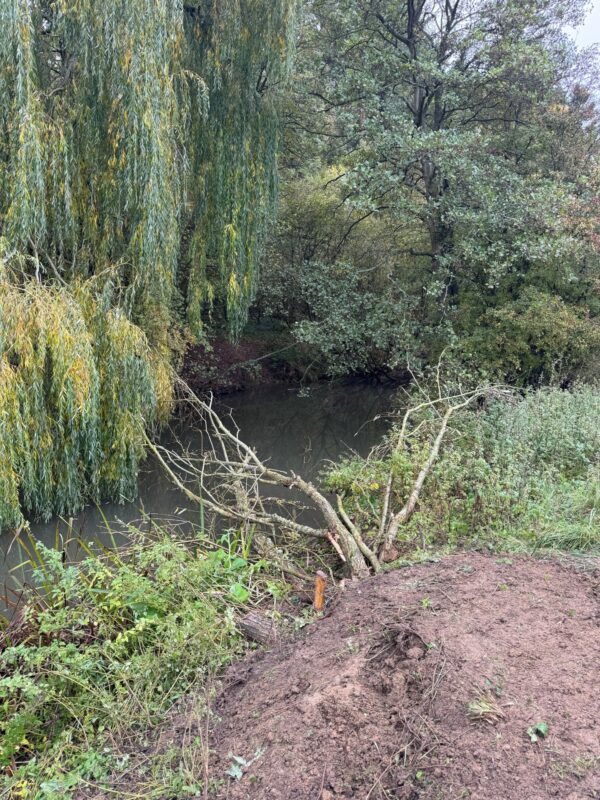
A large woody flow deflector, staked and in position